
Can a retaining wall fix a flooded yard?
A retaining wall can help a flooded yard only when a planned grade change and drainage design address the actual water source. The wall itself is not a pump, a storm sewer or a cure for high groundwater. It may even trap water if built across an existing flow route without a suitable outlet. Roof runoff, surface depressions and water from uphill land need separate consideration. Treating every wet area as a wall problem can waste money and leave the flooding unchanged. We start by asking when the water appears, where it comes from and where it currently goes before deciding whether retaining work belongs in the solution.
Why does water build up behind retaining walls?
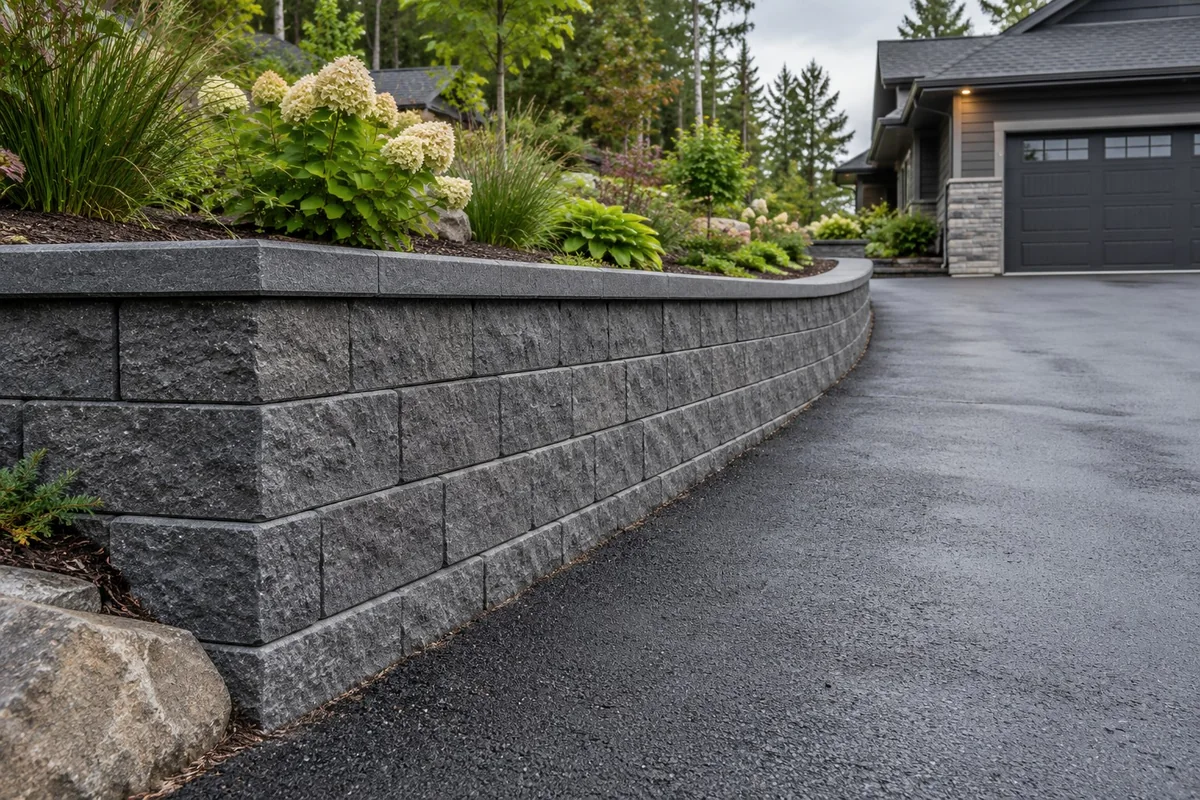
Water can build up behind retaining walls when incoming flow exceeds the ability of the backfill and outlets to drain. Fine soil, blocked pipes, poor grades or concentrated runoff can contribute. Wet soil can increase pressure on the wall, while escaping water may carry soil through gaps or around the ends. Visible staining alone does not reveal the full cause. Adding a pipe without checking its outlet and the surrounding fill may not solve the problem. We assess surface drainage and the hidden wall drainage together, then identify whether the work can be localized or requires opening and rebuilding a larger section.
How can retaining walls help with slope erosion?
Retaining walls can help with slope erosion by holding a planned change in grade and reducing the length of exposed sloping soil. They are most effective when paired with appropriate surface drainage and ground cover. Water running over the wall or around its ends can still cut channels and remove soil. A wall at the bottom of an unstable slope also needs more than a cosmetic stone face. We consider the slope above and below, the water reaching it and the intended finished planting or surface. This helps distinguish manageable surface erosion from a larger stability issue that needs specialist assessment.
Where can drainage water safely discharge?
Drainage water must discharge to a suitable location that complies with the site's requirements and does not create another erosion or flooding problem. A pipe outlet onto a neighbour's property, a walking route or an unstable slope is not an acceptable default. Available grades and existing drainage systems affect the options. Near a lake, stream or wetland, additional review may be needed. An outlet that is too high, buried or easily blocked can make a well-built drain ineffective. We identify the proposed discharge path before finalizing wall construction, because the wall location and finished levels may need to change to make that path workable.
What changes after heavy rain or spring snowmelt matter?
New washouts, persistent ponding, soil escaping through a wall or fresh movement after rain or snowmelt are useful signs to document. They show how the site behaves when water is present, which may be hard to see during a dry visit. Photos from a safe position can record the flow direction and affected areas. Avoid standing near a wall that appears unstable or digging into saturated ground to investigate it yourself. Unchecked water movement can enlarge voids and weaken support. We use your observations alongside the site assessment to understand whether the issue is seasonal surface flow, failed wall drainage or a broader problem.
Do residential and commercial sites need different drainage plans?
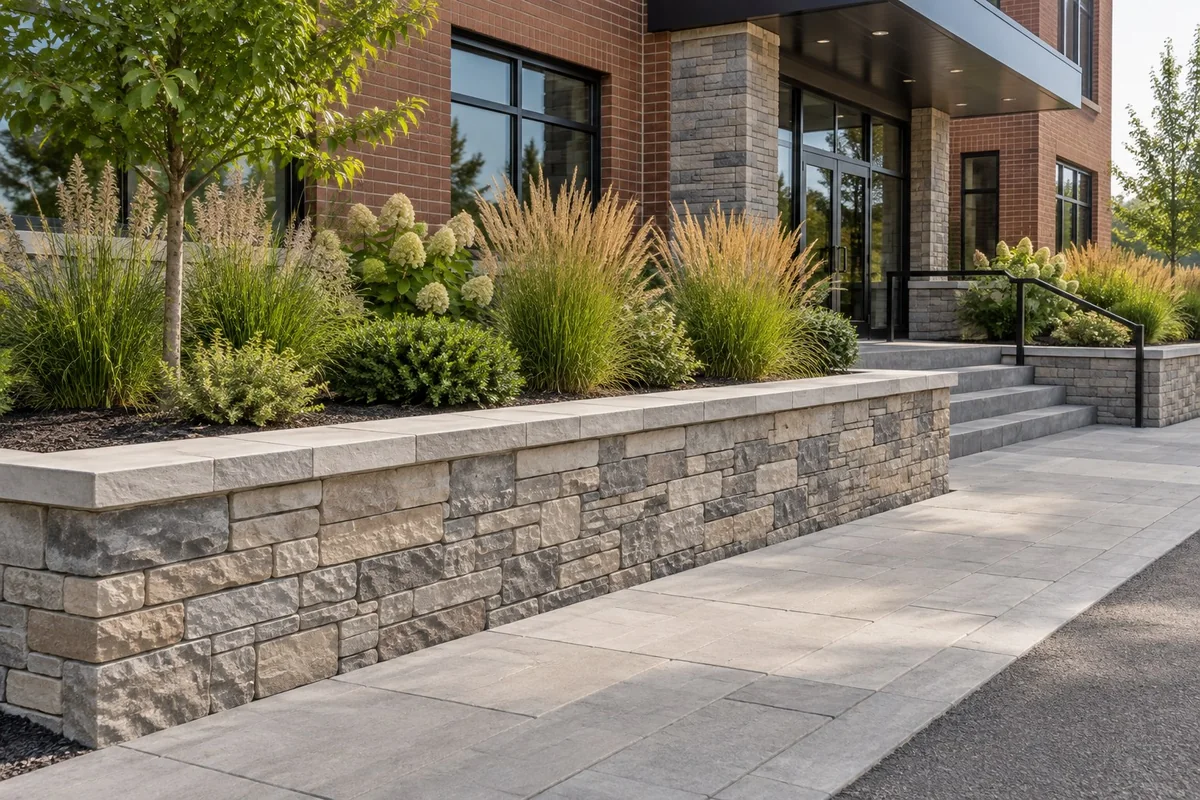
Residential and commercial sites need drainage plans matched to their catchment area and use. A house may have one downspout or a sloping lawn feeding a wall. A business may have a large parking area, roof drains and snow-storage zones directing much more water toward the same edge. The wall's internal drain should not be assumed to carry all of that flow. Underestimating the drainage area can leave the finished system overwhelmed. We discuss existing drainage features and available plans, then define how the retaining-wall work connects with grading or other drainage improvements required for the property.
What should a drainage and erosion enquiry include?
A drainage and erosion enquiry should describe the timing of the problem, the affected area and any recent changes to paving, landscaping or downspouts. Include wide photos, approximate slopes, wall dimensions and the location of visible outlets. If water enters a building, mention that clearly so the retaining-wall scope is not mistaken for a complete building-waterproofing solution. A useful plan may involve more than one type of work. We explain the retaining and grading options within our scope and identify where further design or specialist input is needed, rather than promising that a new wall will solve every water issue on the property.
Discuss your project
Share the location, scope, timing, and any site conditions that may affect the work.