
When does a driveway edge need a retaining wall?
A driveway edge may need a retaining wall where the ground drops away and the intended driving surface requires retained fill. A wall can also hold an uphill bank back from the driveway. These two situations place different demands on the structure and drainage. Crumbling pavement, washed-out gravel or an eroding shoulder can signal that the edge needs assessment, but not every damaged edge requires a wall. Regrading or drainage work may be part of the answer. We look at the source of the problem and the intended vehicle path before recommending a retaining-wall layout or defining any driveway widening work.
Why do vehicle loads change the wall design?
Vehicle loads change the wall design because weight near the top of the wall adds pressure to the retained ground. The type of vehicle, its distance from the edge and the geometry of the site all matter. A household driveway used by cars is different from a commercial lane used by delivery trucks. Future use should be included as well. Moving a parking space closer to a wall can change the conditions even without adding wall height. We identify the expected traffic and where it will travel, then use the appropriate design requirements rather than treating the wall as an ordinary garden border.
Can a retaining wall create room for a wider driveway?
A retaining wall may create room for a wider driveway if the property boundary, grades, approvals and structural design support that change. The finished wall face is not the only space required. Footings, drainage or reinforced soil may extend behind or below it. Existing utilities and neighbouring property can further limit the usable footprint. Building at the apparent edge without confirming those limits can lead to an impractical or non-compliant layout. We discuss the width you want and check what the retaining work would need. A survey and project-specific design may be necessary before the final alignment and construction scope can be settled.
How is driveway runoff kept from damaging the wall?
Driveway runoff needs a planned route that protects the wall and the adjacent ground. Sloped paving can direct water toward the upper side of a wall, while a narrow strip at the lower side may collect water against its base. Both conditions need attention. A drain behind the wall handles a different problem from concentrated flow on the driveway surface. Ignoring that difference can leave washouts or ponding after the wall is complete. We consider driveway crossfall, low points and discharge locations together with the retaining structure, so the finished edge does not simply move a drainage problem to another part of the property.
Which materials work beside a driveway?
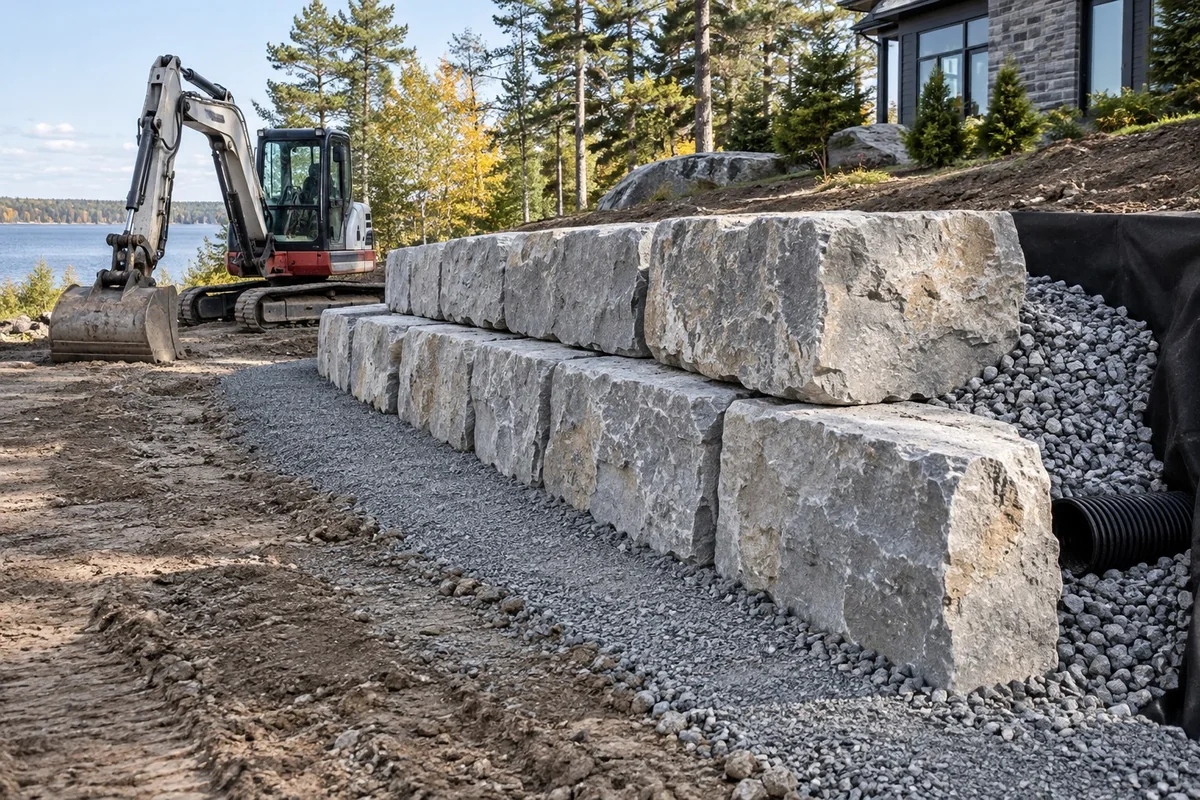
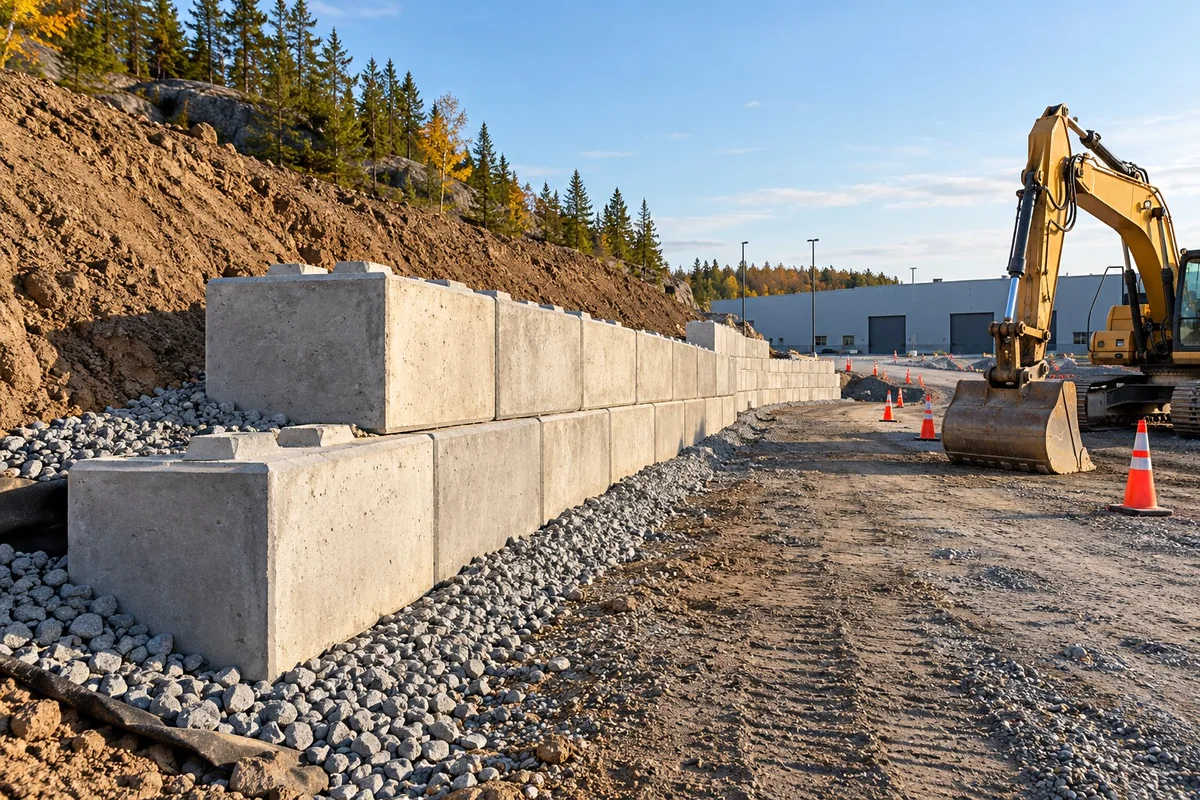
Armour stone, concrete block and poured concrete can all work beside a driveway when the chosen system fits the loads and available space. Natural stone gives a substantial landscape edge, while manufactured blocks offer regular courses and curves. Poured concrete may suit a specific structural shape or finish. Snow clearing, splash and de-icing exposure should be discussed when selecting materials and details. An attractive narrow wall is not useful if its hidden footprint conflicts with the driving surface. We compare the feasible options against access, drainage and vehicle use before narrowing the choice to appearance and budget.
How is driveway access handled during construction?
Driveway access during wall construction depends on where excavation occurs and whether vehicles can stay clear of the work. Removing an existing retaining wall may temporarily leave an edge unsupported. Material delivery and equipment also need space that cannot always be shared with normal traffic. A staged plan may be possible, but should not be assumed. For a home, discuss parking and access to the garage. For a commercial site, identify delivery and emergency routes. We define these constraints before work starts so the construction method, temporary closures and restoration are understood as part of the project.
What should I send for a driveway wall estimate?
For a driveway wall estimate, send the location, wall length, highest exposed point and photos looking along both sides of the edge. State whether the wall holds up the driveway or holds a bank away from it. Include the vehicles using the area and whether widening, resurfacing or new parking is planned. A close photo of damaged pavement helps, but a wider view shows the slope and drainage context. Without that information, a price can miss the work that gives the new edge proper support. We use your initial details to identify what needs measuring and which scope questions should be resolved next.
Discuss your project
Share the location, scope, timing, and any site conditions that may affect the work.